

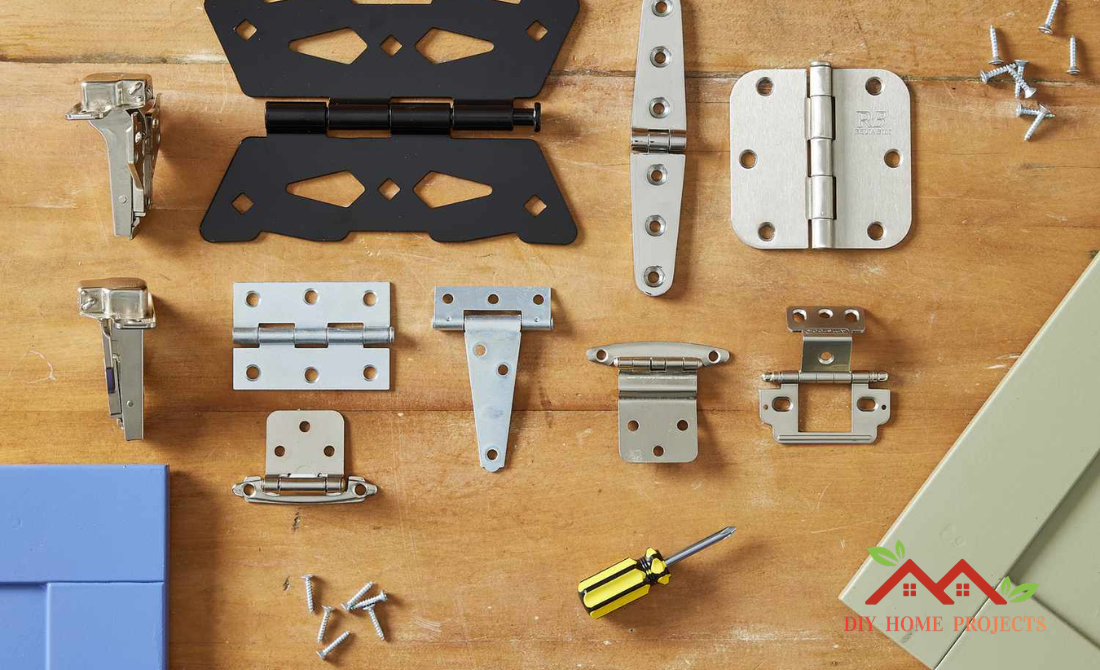
Choosing the right kitchen door hinges starts with matching your cupboard’s construction, door position and existing fittings. Before buying replacements, check the hinge markings, cup diameter, screw positions and mounting plate. Hinges that look similar may fit differently.
This guide covers kitchen cupboard doors, helping you identify suitable hinges, avoid buying mistakes and solve common fitting problems.
Main Types of Kitchen Door Hinges
Concealed Hinges
Concealed hinges sit inside the cupboard and remain hidden when the door is closed. Many have a circular cup fitted into the back of the door and an arm connected to a mounting plate.
They are popular for modern kitchens because they provide a clean appearance and often allow adjustments after fitting.
Full-Overlay Hinges
Full-overlay hinges allow a door to cover most of the cabinet side’s front edge. They are commonly used on frameless cupboards.
The precise amount of overlay depends on the hinge, mounting plate and drilling position.
Half-Overlay Hinges
Half-overlay hinges suit arrangements where two doors share a central cabinet partition. Each door covers part of that partition’s front edge, with clearance between them.
Inset Hinges
Inset hinges are designed for doors that sit inside the cabinet opening. Accurate positioning helps maintain even gaps around the door.
Butt Hinges
Traditional butt hinges consist of two leaves joined by a pin. They suit certain framed and traditional cupboards, where visible hardware may form part of the design.
They usually offer less adjustment than modern concealed hinges.
Soft-Close or Self-Closing Hinges?
Soft-close hinges slow the final closing movement, helping prevent doors from slamming. Self-closing hinges use spring action to pull the door shut near its closed position, but do not necessarily slow it down.
A hinge can include both functions. Hettich’s Sensys range, for example, includes concealed hinges with integrated damping.
“Clip-on” describes something different: how the hinge attaches to its compatible mounting plate. It does not mean the hinge has soft-close action.
For handleless cupboards, check that the hinges work with the intended push-to-open system.
What Size Kitchen Door Hinges Do You Need?

Do not choose a replacement by cup diameter alone. Check these measurements and details:
| What to check | Why it matters |
|---|---|
| Cup diameter | Must match the circular hole in the door |
| Cup depth | Must suit the recess and door thickness |
| Screw-hole spacing | Determines whether existing fixing holes align |
| Door overlay | Determines where the closed door sits |
| Mounting plate | Must be compatible with the hinge |
| Opening angle | Affects access and clearance around the door |
35 mm is a common concealed-hinge cup diameter, while smaller 26 mm versions are also available. Measure yours before ordering.
Also measure the cup setback: the distance between the door edge and the nearest edge of the cup hole. This affects the hinge’s installation geometry.
How to Choose the Right Hinges
Identify Your Cabinet Construction
A frameless cupboard has no separate frame around its front opening. A face-frame cupboard has a frame attached to the front.
Choose a hinge and mounting arrangement designed for your cabinet type.
Look for a Part Number
Check the old hinge and mounting plate for a manufacturer’s name or stamped number. An exact replacement is often the simplest option.
If no markings are visible, take clear photographs and measurements to a hardware supplier.
Check Door Weight and Size
The number of hinges required depends on the door’s weight, height, width and material. Tall or heavy doors may need additional support.
Use the hinge manufacturer’s selection guidance rather than assuming every door needs two hinges.
Check Opening Clearance
The door must open without hitting nearby walls, handles or appliances. Internal drawers may also need a particular hinge arrangement to slide out freely.
A wider opening angle is useful only when the surrounding space allows it.
Confirm What You Are Buying
Some hinges are sold without mounting plates or fixings. Check whether the price covers one hinge, a pair or a complete set.
For multiple identical cupboards, fitting one suitable replacement first can help prevent a larger ordering mistake.
How to Replace Kitchen Cupboard Hinges
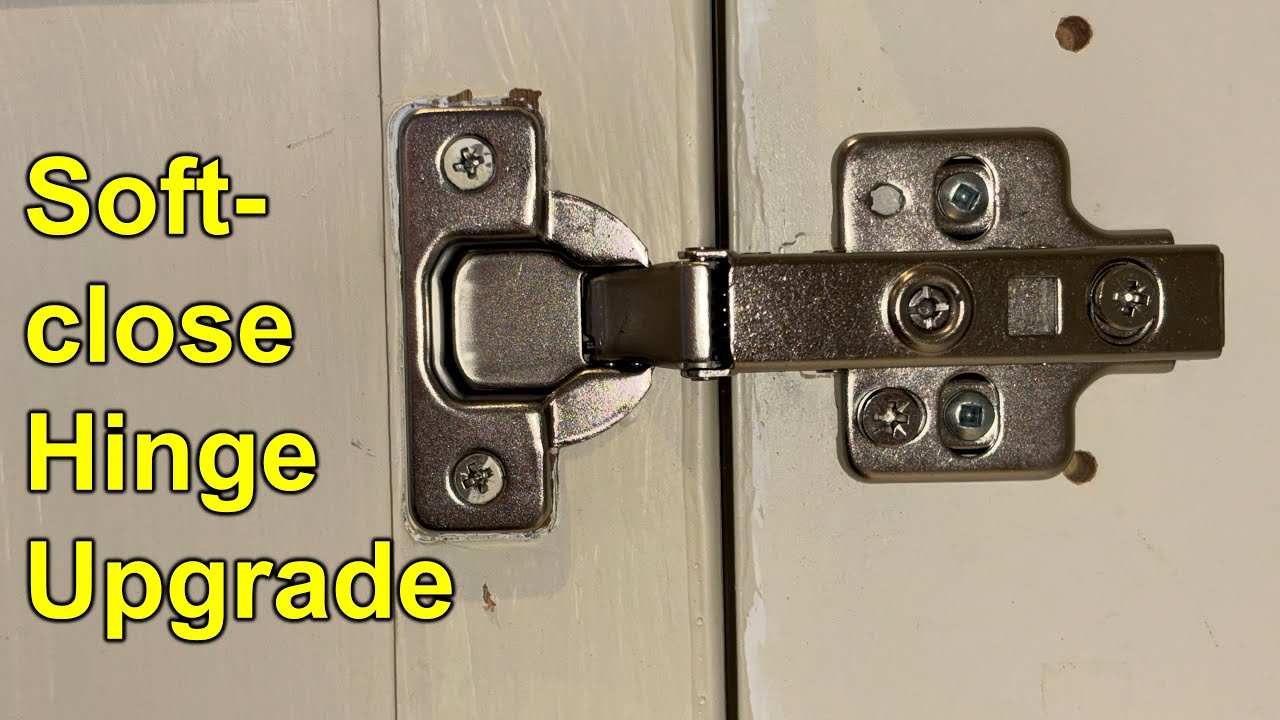
Replacing like-for-like hinges is usually simpler than changing the hinge type or drilling new holes.
- Support the door before disconnecting the hinges.
- Remove the door carefully, following the release mechanism or fixing arrangement.
- Inspect the holes for loose screws, cracks or damaged material.
- Fit the compatible hinges and plates according to their instructions.
- Reattach and adjust the door, checking its movement and surrounding gaps.
Use the specified screws and avoid overtightening them, especially in MDF or particleboard. Damaged fixing holes need an appropriate repair; tightening the screw harder will not restore its grip.
If new cup holes are needed, accurate positioning and drilling depth are essential. Consider using a cabinet fitter if you lack the correct equipment.
Common Hinge Problems and What to Check
| Problem | First checks |
|---|---|
| Door hangs unevenly | Loose fixings and height adjustment |
| Door rubs against another front | Side-to-side alignment and gaps |
| Door will not close fully | Obstructions, depth adjustment and hinge compatibility |
| Door repeatedly drops | Damaged screw holes, worn hinges or insufficient support |
| Soft-close stops working | Damper setting, alignment and mechanism condition |
Make adjustments gradually and close the door after each change. Consult the hinge instructions to identify adjustment screws correctly.
For routine care, wipe hinges with a soft cloth and dry them after cleaning. Avoid abrasive products, and apply lubricant only where the manufacturer recommends it.
FAQ’s
Q1. Are kitchen door hinges universal?
No. Matching cup sizes do not guarantee matching mounting plates, fixing patterns or door positions.
Q2. Can I change ordinary hinges to soft-close?
Often, yes, if compatible replacement hinges or approved add-on dampers are available.
Q3. Should I replace the mounting plates?
Only reuse existing plates when they are undamaged and confirmed compatible with the new hinges.
Q4. Can hinges fix a warped cupboard door?
Hinge adjustment can improve alignment, but it cannot straighten a warped door. Inspect the door and cabinet before replacing hardware.
Conclusion
The right kitchen door hinges should match the cupboard construction, door position, drilling and weight. Check the existing part number and measurements before ordering, then confirm plate compatibility and opening clearance. Careful selection and small adjustments can make cupboard doors easier to use without replacing the entire kitchen.
