

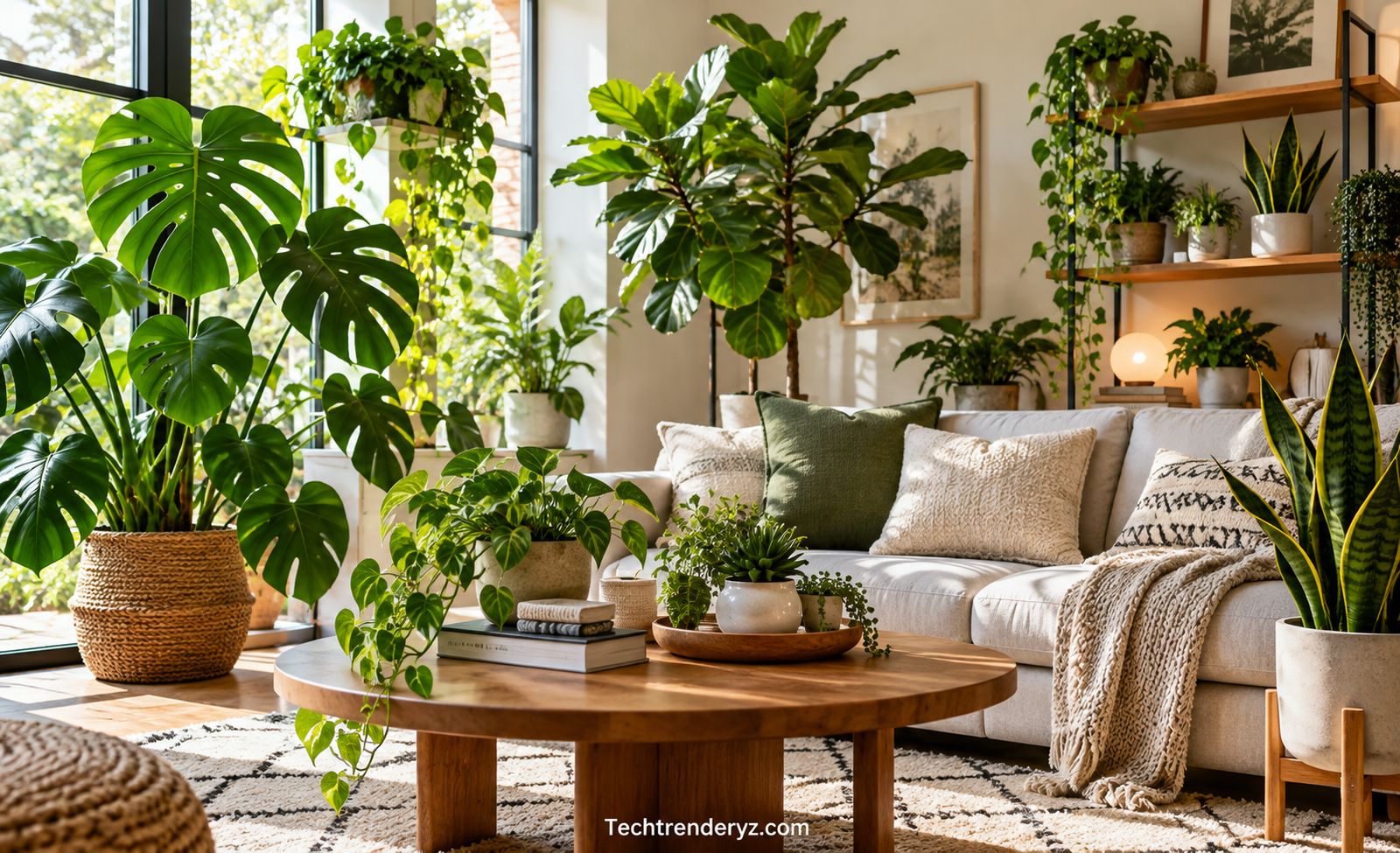
The best house plants 2026 include snake plants and ZZ plants for people who occasionally forget watering, pothos for trailing greenery, and spider plants for an approachable first purchase. Monstera and dracaena are also worth considering if you want a larger statement plant. The right choice depends on your available light, space, and care routine—not simply how attractive a plant looks in a photograph.
You do not need a room full of rare varieties to create a beautiful indoor garden. A few well-chosen plants can give a shelf, bedroom, or living room character without making maintenance overwhelming. This guide explains which plants suit different homes, what the 2026 trends actually mean, and how to avoid common buying and watering mistakes.
1. House Plant Trends for 2026: What Is Worth Following?
Large foliage is a notable theme in the Royal Horticultural Society’s 2026 gardening predictions. The RHS highlights monstera and dracaena and reports that houseplant sales through its own retail operation increased by 15% over the preceding year. That figure describes RHS retail activity; it is not a worldwide sales statistic or a measure of Google search demand.
For home decorators, this offers a simple idea: one substantial plant can become the centrepiece of a room. You might choose a broad-leaved plant beside a reading chair or an upright variety to frame a bright window. Before buying, measure the space available around the plant, including the width its leaves will eventually occupy.
The RHS also identified growing interest in moving suitable plants between indoor and outdoor spaces during favourable weather. This approach needs local judgement. A sheltered summer balcony and an exposed patio have very different conditions, and indoor foliage needs gradual adjustment to outdoor light.
Useful ideas to take from these trends include:
- Make one healthy plant the focal point of a room.
- Choose containers that remain accessible for watering.
- Leave space for leaves and stems to grow.
- Follow trends only when the plant suits your conditions.
2. Choose Your Plant by Light Before Appearance
Light is one of the most important factors in successful indoor gardening. A room that looks bright to your eyes may offer limited usable light several metres from a window. Curtains, nearby buildings, trees, and seasonal changes all affect what reaches the leaves. University of Minnesota Extension identifies long gaps between leaf nodes as one possible sign of insufficient light.
Observe your intended plant spot in the morning, around midday, and later in the afternoon. Does sunlight land directly on the leaves, or is the location bright without a strong sunbeam? This small exercise helps you interpret care labels more accurately than describing an entire room as “sunny.”
Use these descriptions as a starting point:
- Direct light: Sunlight falls directly onto the plant.
- Bright indirect light: Strong daylight reaches the plant without prolonged direct sun.
- Lower light: Less daylight reaches the plant, often limiting growth.
- No natural light: Supplemental plant lighting is needed for long-term growth.
“Low-light tolerant” does not mean a plant can live indefinitely in darkness. The RHS specifically warns that even easy-care houseplants cannot tolerate a completely dark, windowless location without a suitable light source.
3. Best Easy-Care House Plants for Beginners

A useful beginner collection starts with plants whose care requirements fit your habits. Someone who travels frequently needs a different choice from someone who enjoys checking soil and tending plants several times a week. Start with one or two varieties so you can learn their needs without juggling many different routines.
The following comparison provides a practical shortlist. Light descriptions indicate useful growing conditions, rather than a promise that every variety will perform equally well in every room.
| House plant | Useful placement | Main advantage | Main drawback |
|---|---|---|---|
| Snake plant | A bright spot; tolerates lower light | Handles dry intervals | Vulnerable to excessive watering |
| ZZ plant | Indirect light; tolerates lower light | Low watering demand | Slow growth may disappoint |
| Golden pothos | A shelf with indirect daylight | Trailing stems suit small spaces | Needs occasional pruning |
| Spider plant | A position with good indirect light | Accessible choice for beginners | Arching leaves need room |
| Parlour palm | Filtered light, away from harsh sun | Soft, upright foliage | Needs more moisture attention than a succulent |
Illinois Extension includes snake plants, ZZ plants, pothos, and spider plants among options for lower-light interiors. The RHS also identifies parlour palms as relatively straightforward indoor palms that tolerate fairly low light.
Treat this shortlist as a way to narrow your shopping, then check the botanical name and care label before purchasing.
4. Snake Plant and ZZ Plant: Good Choices for Busy Households
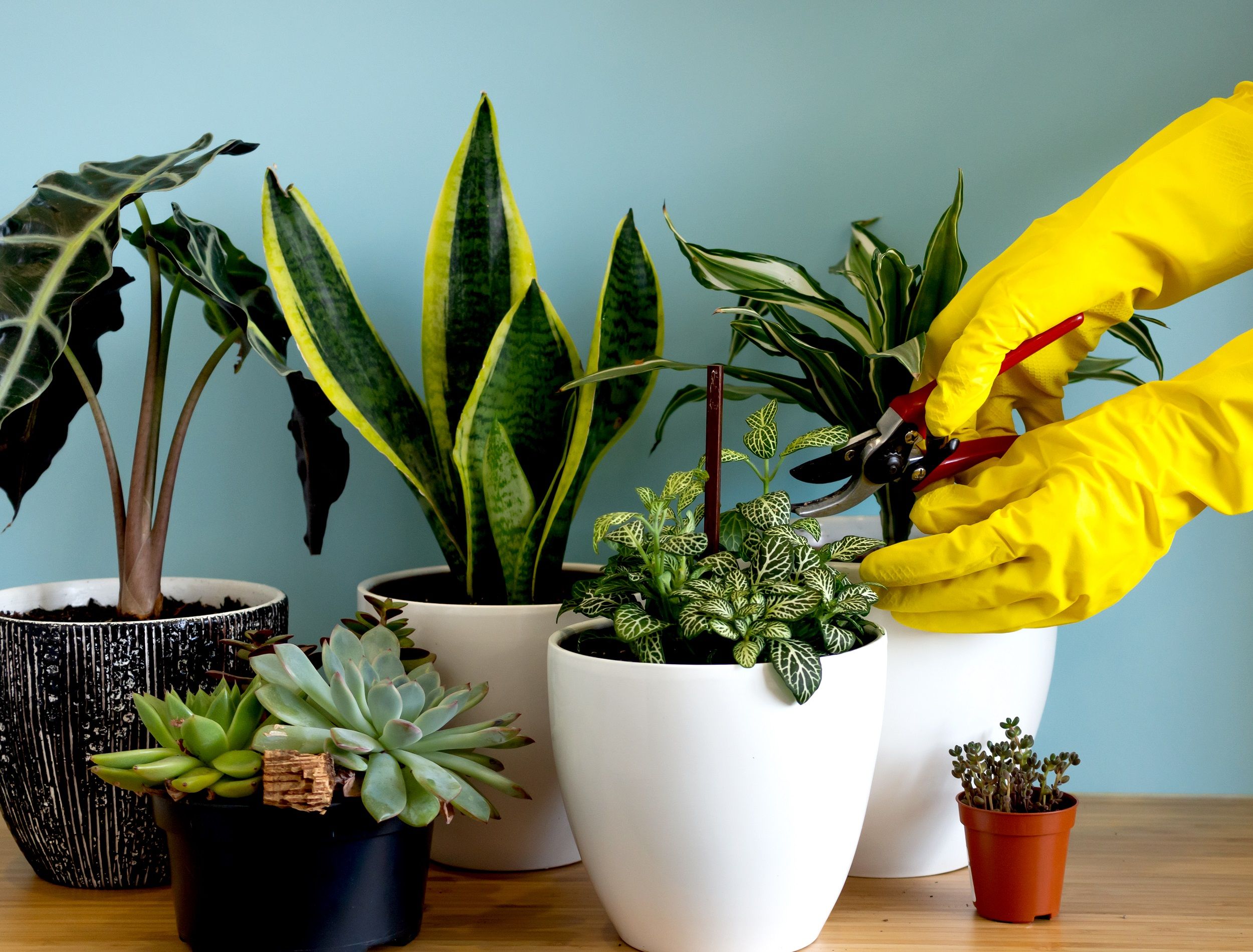
Snake plants have upright leaves that fit neatly into narrow spaces. They are useful when you want greenery beside furniture without a wide canopy spreading across the room. Their tolerance of dry conditions makes them suitable for people who sometimes forget to water.
The main mistake is watering too frequently. Illinois Extension advises allowing snake plant soil to dry completely between waterings. Put a reminder in your calendar to check the plant, rather than automatically adding water whenever the reminder appears.
ZZ plants offer glossy foliage and a fuller silhouette. Their ability to store water helps them cope with dry intervals, making them another practical option for a busy household. However, an easy-care plant still needs appropriate light and drainage; a permanently wet pot can undermine its resilience.
Pros:
- Suitable for owners who prefer less frequent watering.
- Strong foliage shapes work well in simple interiors.
- No need to maintain a complicated display.
Cons:
- Excessive watering can cause serious problems.
- Growth may be slow, particularly in dim conditions.
- Neither should be treated as an edible or chew-safe plant.
Choose between them mainly by available space: snake plants create a narrow vertical accent, while a ZZ plant generally needs more room around its stems.
5. Pothos and Spider Plants for Shelves and Smaller Rooms
Golden pothos is useful when you want greenery to trail from a shelf or plant stand. Its stems can soften the edge of furniture, but the position still needs daylight. A shelf chosen purely for decoration may be too dark, especially if it sits well above or far from a window.
Illinois Extension recommends allowing golden pothos to dry moderately between waterings. It also distinguishes its care from plants sold under related common names, such as silver pothos, reinforcing why checking the exact plant identity matters.
Spider plants offer a different shape, with arching leaves that spread outward. They can suit a bright kitchen shelf or raised stand where the foliage has room to fall naturally. When choosing a container, allow enough clearance so leaves do not constantly catch on doors, curtains, or passing people.
For either plant, think about maintenance access before installing a hanging display:
- Can you lift the pot safely?
- Can excess water drain without damaging furniture?
- Can you inspect the undersides of the leaves?
- Will trailing growth block a walkway or workspace?
An attractive display should remain easy to care for after the first photograph. If watering requires moving several objects or climbing awkwardly, choose a simpler position.
6. Monstera, Dracaena, and Other Statement Plants
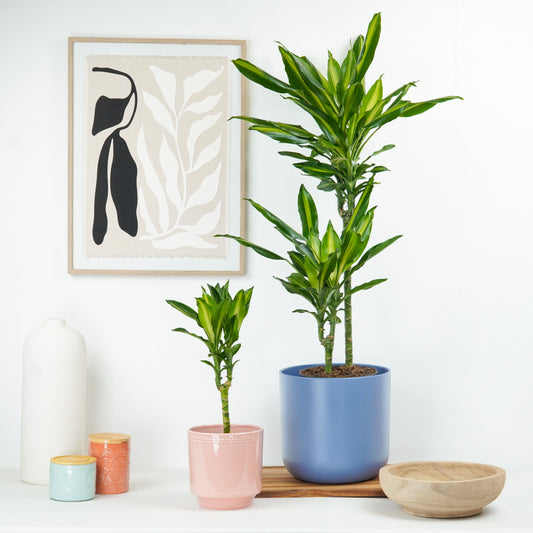
Monstera and dracaena are prominent in the RHS’s 2026 forecast, making them relevant choices for readers seeking current indoor plant inspiration. Their appeal is different: monstera creates a broad, leafy presence, while many commonly sold dracaenas offer a more upright outline.
A statement plant works best when you plan for its future size. Consider whether its leaves will crowd a sofa, cover a socket, or obstruct a door. Buying a smaller specimen can make the initial cost and transport easier, but it does not remove the need for suitable growing space.
Light also matters more than an empty corner. University of Maryland Extension lists dracaena among plants suited to medium-bright conditions, while Illinois Extension cautions against placing monstera in a low-light position simply because space is available there.
Before committing to a large plant:
- Measure the available floor area.
- Check how you will carry it home.
- Choose a stable container.
- Allow access for cleaning and inspection.
- Ask the seller about the mature size of the exact variety.
A single plant with room to develop often makes a more convincing display than several large specimens squeezed together.
7. Choosing House Plants When You Have Pets

Pet owners should check plant identity before purchasing, especially when common names are vague. The ASPCA lists the spider plant, Chlorophytum comosum, as non-toxic to cats and dogs. Its snake plant listing, by contrast, identifies toxicity to both species.
“Non-toxic” does not mean a plant is intended as pet food. The ASPCA notes that eating plant material can still cause gastrointestinal upset. Keep plants where pets are less likely to chew them, pull them down, or dig through the potting mix.
A sensible buying routine is to photograph the label and check the botanical name against a reliable pet-toxicity database. Do this before paying, rather than relying on a broad shop sign that labels an entire display “pet friendly.”
Also consider the physical setup. A heavy planter near the edge of a shelf can be a hazard even when the plant itself is non-toxic. Trailing stems may attract a playful cat, while accessible potting mix may interest a dog.
If a pet eats a potentially toxic plant, contact a veterinarian promptly and provide the plant name or a clear photograph.
8. How to Water, Feed, and Repot Indoor Plants

The most useful watering rule is to respond to the plant and its growing medium. A fixed weekly schedule can be misleading because drying speed changes with temperature, light, pot size, and plant growth. Check below the surface rather than judging only by how the top looks.
When watering is needed, wet the root zone thoroughly and allow excess water to escape through drainage holes. Empty collected water from the decorative outer pot or saucer. The RHS’s watering guidance recommends continuing until water flows through the bottom of the container.
Repot when the plant needs it, rather than whenever you buy a new decorative container. University of Minnesota Extension suggests looking for circling roots, roots emerging through drainage holes, or unusually rapid drying. Moving up one pot size is generally more sensible than choosing a dramatically larger container.
For routine care:
- Use a potting mix suited to the plant.
- Confirm that the growing pot has drainage holes.
- Feed according to the product instructions and plant requirements.
- Adjust care when growth and light levels change.
- Record watering dates if several people share responsibility.
Fertiliser is not a substitute for adequate light or healthy roots. If a plant is struggling, identify the underlying problem before adding more products.
9. Yellow Leaves, Brown Tips, and Pest Problems
A yellow leaf is a clue, not a diagnosis. Excessive watering, insufficient moisture, poor light, and other stresses can produce overlapping symptoms. Check the soil, drainage, recent changes, and overall pattern before deciding what to do.
The RHS notes that both too little and too much water can cause wilting. It also identifies dark, mushy roots as a warning sign associated with excessive moisture. This is why adding water immediately to every drooping plant can make a problem worse.
Use this troubleshooting sequence:
- Check moisture below the potting mix surface.
- Look for water trapped in the outer container.
- Examine leaf undersides and stem joints.
- Consider recent changes in light or temperature.
- Adjust the likely cause and observe new growth.
For pests, early inspection matters. University of Minnesota Extension recommends isolating newly acquired plants for one to two weeks and looking for insects, webbing, eggs, and sticky deposits. If pests appear, separate the affected plant from the rest of the collection.
Avoid applying several treatments at once without identifying the issue. Keep notes or photographs so you can judge whether the plant is improving, rather than relying on memory.
10. Buying Locally and Weighing the Pros and Cons
A nearby nursery can be useful because you can inspect the actual plant and discuss conditions in your area. Tell the seller about your window light, heating or air conditioning, and watering habits. Ask for a plant suited to those conditions instead of requesting something that is simply “hard to kill.”
Climate matters even indoors. A room with strong air conditioning behaves differently from a humid apartment, and winter conditions vary considerably between countries. The RHS recommends assessing light, humidity, and temperature when matching a plant to a location.
Pros of keeping house plants:
- They introduce living colour and texture into a room.
- A small collection can fit limited space.
- Caring for them offers an ongoing hobby.
- You can arrange a display around your own taste.
- Healthy plants can become long-lasting features of a home.
Cons to consider:
- Every plant requires some attention.
- Larger specimens need space and stable containers.
- Pests can spread between plants.
- Some species are unsuitable around chewing pets.
- Pots, growing media, and lighting can add to the cost.
For a first purchase, set a total budget that includes the plant, a suitable container, and any necessary supplies. Skip extra accessories until you know what your plant actually needs.
FAQ’s
Q1. What are the easiest house plants to grow in 2026?
Snake plants, ZZ plants, pothos, and spider plants are useful beginner choices. Select one that matches your available light and watering habits.
Q2. Can house plants survive in a room without windows?
They need suitable artificial lighting for long-term growth in a windowless room. Low-light tolerance does not mean a plant can live in complete darkness.
Q3. How often should I water house plants?
Check the potting mix and the plant’s requirements rather than following one fixed schedule. Watering frequency changes with light, temperature, pot size, and growth.
Conclusion
The best approach to house plants in 2026 is to combine inspiration with realistic care. Monstera and dracaena offer the large foliage highlighted in this year’s RHS forecast, while snake plants, ZZ plants, pothos, and spider plants provide useful starting points for a manageable collection.
