

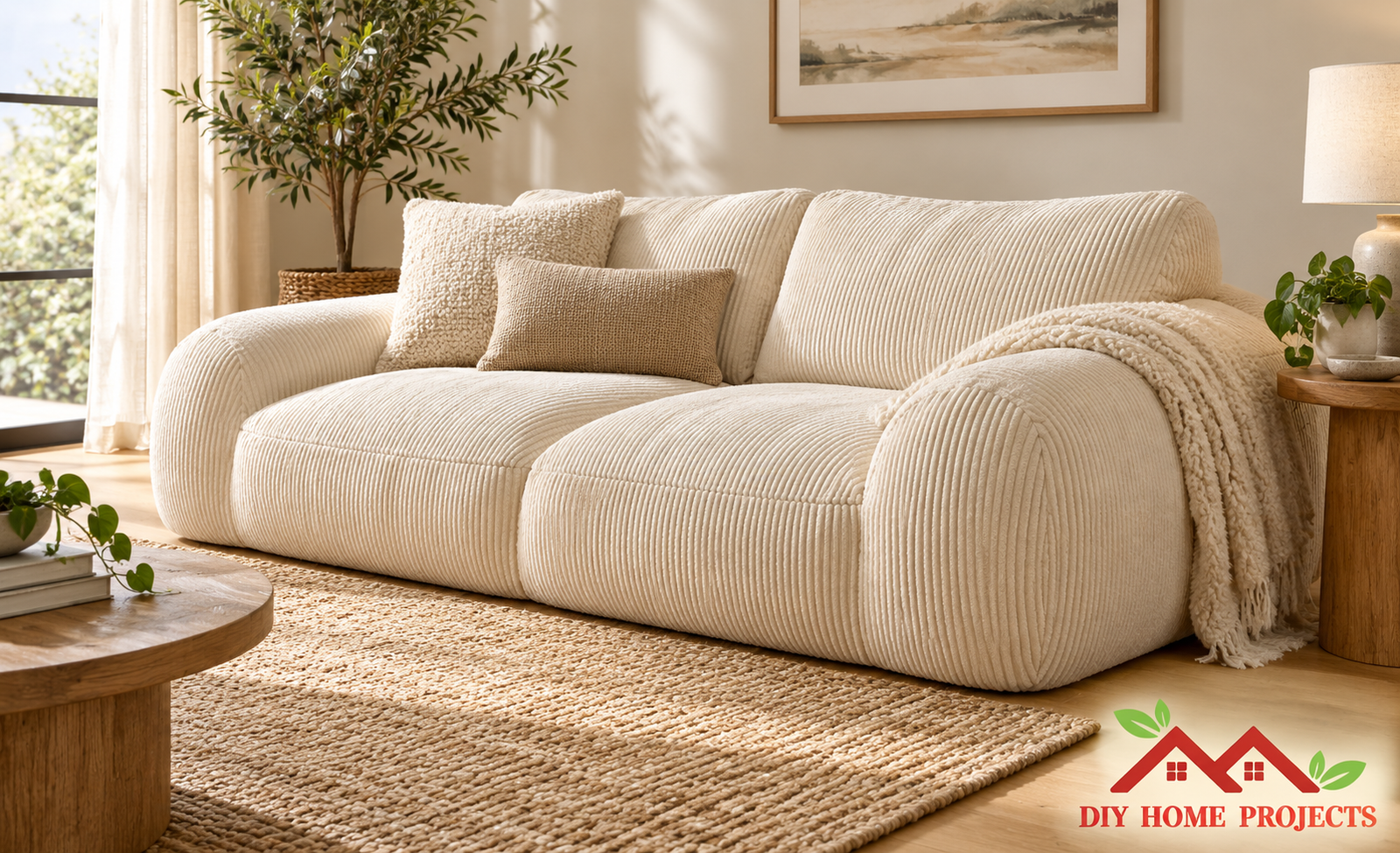
What Is a Boneless Couch? It is a sofa that typically uses shaped foam and cushioning instead of a traditional wooden or metal frame. Designed for relaxed lounging, it offers soft surfaces and an informal look that can suit modern living spaces. Many models arrive compressed in boxes, which can make delivery more manageable through narrow entrances.
However, comfort depends on more than softness: seat height, depth and construction all influence everyday use. Whether you want a cosy movie-night spot or your main living-room sofa, this guide explains the benefits, drawbacks and buying details to help you decide whether this style suits your home.
How Does a Boneless Couch Work?
A traditional sofa usually relies on a rigid frame to hold its shape, with cushioning placed over a supporting structure. In a frameless design, shaped foam provides much of that structure. The base, backrest and arms are arranged to create a recognisable sofa shape without the usual internal skeleton.
That construction distinguishes it from a typical beanbag. A beanbag often contains loose filling that shifts as you move, whereas a foam sofa generally has defined sections that retain a more consistent shape.
However, “boneless” is not a guarantee of identical construction. Sellers use the term across different products, including some with springs or supporting components. Check the materials description rather than assuming that every couch advertised this way contains only foam.
Is It Always Modular?
No. Frameless construction and modular design describe different features. Frameless refers to how the furniture is supported; modular means separate sections can be rearranged.
A one-piece foam loveseat may offer no layout flexibility. A modular sectional might allow you to move a chaise or separate seating blocks. If rearranging your room matters, check which configurations the actual pieces support.
Is a Boneless Couch Comfortable for Everyday Use?
It can be comfortable, particularly if you prefer reclining, stretching out or sitting with your legs tucked up. Nevertheless, softness alone is a poor way to judge a sofa you will use every day.
A seat that feels inviting for ten minutes may become less comfortable during a long evening if it allows you to sink too far. Equally, a firmer foam base may suit someone who wants a more stable sitting position.
Seat Height and Depth Matter
Measure your current sofa before shopping. If you already find its seat too low or too deep, use that experience to rule out similar dimensions.
Deep seating can be appealing for movie nights, but shorter users may need extra cushions behind their backs to sit with their feet on the floor. Low seating can also make standing up more demanding, especially when the front edge compresses under your weight.
For example, someone buying a lounge sofa for occasional gaming may prioritise a generous reclining area. Someone choosing their only living-room couch may care more about upright comfort and an easy transition from sitting to standing.
Foam Density Is Different From Firmness
Density describes the amount of material within a given volume of foam. Firmness describes how much the foam resists compression. The terms are related to different characteristics and should not be treated as interchangeable.
A description such as “high-density comfort foam” does not tell you exactly how the couch will feel. Look for clear material specifications, useful demonstrations and a return policy that gives you a practical option if the comfort disappoints.
Benefits and Drawbacks Compared With a Traditional Sofa
The strongest reason to choose this style is that its design matches how you want to use your room. It should solve a practical need as well as look appealing.
| Feature | Boneless-style sofa | Traditional framed sofa |
|---|---|---|
| Main support | Usually shaped foam; construction varies | Rigid frame with a supporting seat system |
| Sitting experience | Often relaxed, with compressible edges | Varies, with more defined edges in many models |
| Delivery | Many models arrive compressed | May arrive assembled or in separate sections |
| Appearance | Often low and informal | Available in both formal and casual styles |
| Repair options | Depend on replaceable foam and covers | Depend on access to cushions, upholstery and frame |
Main Advantages
- Convenient delivery options: Compressed packaging may help with narrow access routes.
- Relaxed seating: Deep cushions can suit reading, watching films and stretching out.
- Flexible layouts on modular models: Separate pieces can accommodate different room arrangements.
- Fewer hard surfaces on fully foam designs: Arms and edges can feel softer when you lean against them.
These advantages depend on the model. A large package can still be heavy, and a modular sofa may require connectors or a suitable base to keep sections aligned.
Main Limitations
The main trade-off is the feel of the structure. People who prefer firm armrests, a high seat or a clearly supported upright position may find some designs too yielding.
Long-term shape retention also matters. Foam quality, construction and frequency of use influence how the seat performs over time. Avoid assuming that removing the frame automatically makes a sofa more durable or less durable.
Finally, consider repairability. If the seating foam loses its shape, can you replace an individual insert, or would you need to replace the whole section?
What to Check Before Buying a Boneless Couch
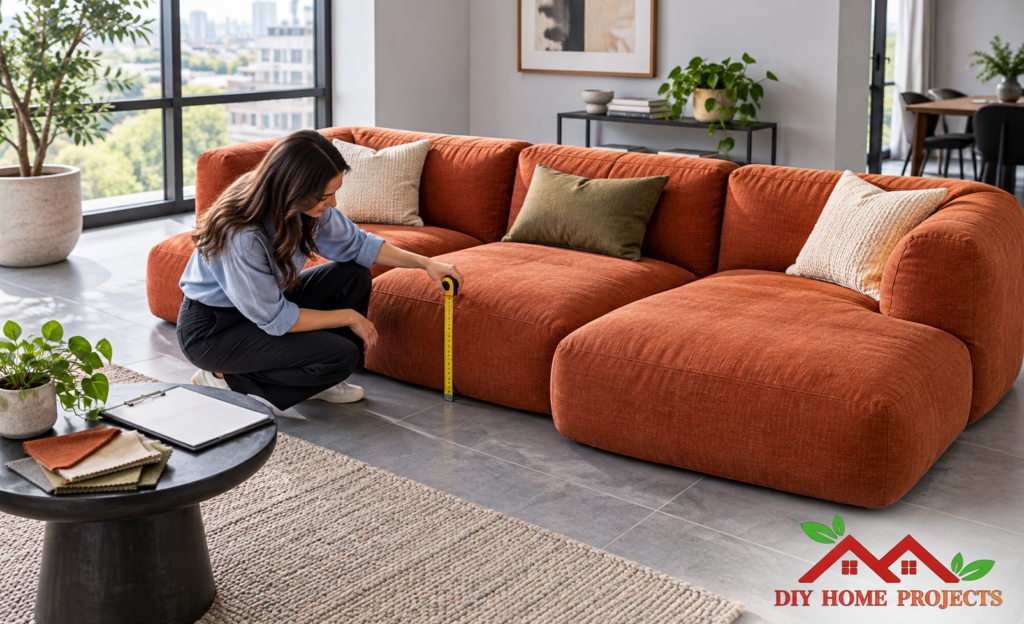
A useful buying checklist goes beyond colour and overall width. Focus on the details that affect delivery, daily use and the cost of changing your mind.
1. Measure the Sofa and the Delivery Route
Check the expanded width, depth and height alongside the package dimensions. Measure doors, stair turns and lift openings where relevant.
Mark the sofa’s footprint on the floor with removable tape. This makes it easier to judge whether a deep seat or chaise will interfere with walkways.
2. Read the Construction Details
Look for an explanation of the foam layers, any springs or supports, and how the backrest stays in position. For modular models, check whether sections connect and whether those connectors are included.
Treat vague comfort claims as a starting point for questions, rather than a complete specification.
3. Check the Upholstery and Cleaning Instructions
Removable covers are useful, but removable does not automatically mean machine washable. Check washing instructions, drying requirements and whether replacement covers are available.
Choose fabric with your household in mind. Consider pet hair, crumbs, spills and how easily you can reach the gaps between sections.
4. Understand Expansion and Setup
Vacuum-compressed models need time to regain their intended shape after unpacking. Follow the manufacturer’s stated expansion period rather than judging the final comfort immediately. Keep packaging cutters away from the fabric and avoid improvised heating methods unless the instructions specifically allow them.
5. Read the Return and Warranty Terms
An expanded couch may be difficult to fit back into its original box. Before ordering, find out:
- Whether opened and expanded furniture can be returned.
- Who pays collection or return shipping costs.
- Whether original packaging is required.
- What the warranty says about sagging and normal softening.
- Whether replacement covers or seating sections can be purchased.
Calculate the total cost, including delivery and any essential accessories. A low advertised price is less attractive if returning an unsuitable sofa would be expensive.
FAQ’s
Q1. Can You Sleep on a Boneless Couch?
Some designs unfold into a sleeping surface, but that does not make every model suitable for nightly use. Check the usable dimensions, surface joins and intended purpose. For regular sleeping, assess it as carefully as you would any other bed.
Q2. How Long Does a Boneless Couch Last?
There is no dependable lifespan that applies to the entire category. Foam quality, upholstery, construction and daily use all matter. Clear warranty coverage and replaceable components are more useful buying signals than an unsupported promise about years of service.
Q3. Does It Need to Stand Against a Wall?
That depends on the design. Some have self-supporting backrests, while others may benefit from wall placement. Check the recommended layout before planning to position one in the middle of a room.
Q4. How Do You Keep It Clean?
Vacuum with an appropriate upholstery attachment and follow the fabric’s care instructions. Blot spills promptly, avoid soaking the foam and let cleaned areas dry fully. Only remove and wash covers when the care label permits it.
Q5. Is a Boneless Couch Cheaper?
Not necessarily. Prices vary with size, materials, upholstery and brand. Compare sofas with similar seating capacity and include delivery, warranty coverage and replacement-part availability when judging value.
Conclusion
A boneless couch can be worth buying if you want relaxed seating, like the feel of foam and find a model that suits your room and sitting habits. Its value depends on the actual construction, comfortable dimensions and manageable care requirements.
