

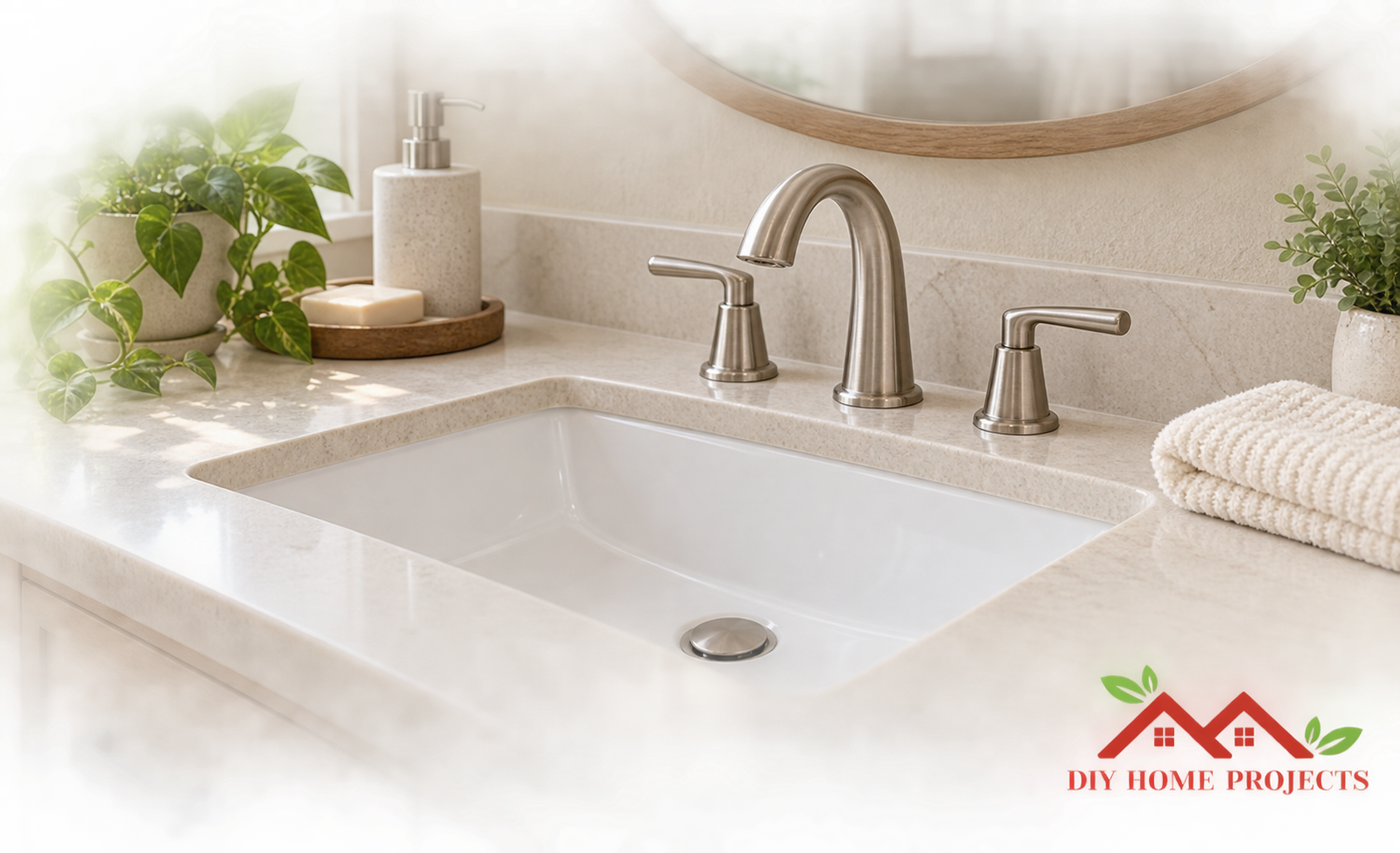
The best bathroom sink fits your available space, provides comfortable washing room, and suits your cleaning routine. For many households, a ceramic basin paired with a storage vanity is a practical starting point. Smaller bathrooms may benefit from a compact wall-mounted sink, while a vessel bowl can add character to a guest bathroom.
Before buying, check more than the color and shape. The sink’s measurements, mounting method, faucet position, and plumbing connections determine whether it will work in your bathroom.
Bathroom Sink Sizes: What Dimensions Should You Choose?
There is no single universal bathroom sink size. Dimensions vary by design and manufacturer, and the overall basin measurements are different from the usable bowl inside.
The following ranges provide a useful shopping starting point. Centimeter conversions are rounded.
| Sink type or measurement | Typical dimensions in inches | Approximate dimensions in centimeters |
|---|---|---|
| Common single basin: side-to-side width | 19–24 inches | 48–61 cm |
| Common single basin: front-to-back measurement | 15–22 inches | 38–56 cm |
| Common basin interior depth | 5–8 inches | 13–20 cm |
| Compact powder-room basin: width | 11–20 inches | 28–51 cm |
| Round vessel sink: diameter | 14–20 inches | 36–51 cm |
| Pedestal basin: width | 19–24 inches | 48–61 cm |
These are approximate product ranges, not installation standards or guaranteed cutout sizes. Always confirm the selected model’s specification drawing.
How to Measure Before Buying
Measure the available counter width and front-to-back space. Then check the existing cutout, faucet holes, and room beneath the basin.
Remember these distinctions:
- Overall dimensions: The sink’s outside measurements, including its rim.
- Interior bowl dimensions: The space available for washing.
- Cutout dimensions: The opening required in the countertop.
- Finished rim height: The distance from the floor to the basin’s upper edge.
A sink that fits across the countertop may still interfere with drawers underneath. Use the manufacturer’s template and check the drain position before ordering.
For a vessel sink, include the bowl’s above-counter height when planning the vanity. Otherwise, the finished washing surface may feel too high.
Which Bathroom Sink Style Is Best?
Drop-In Sink
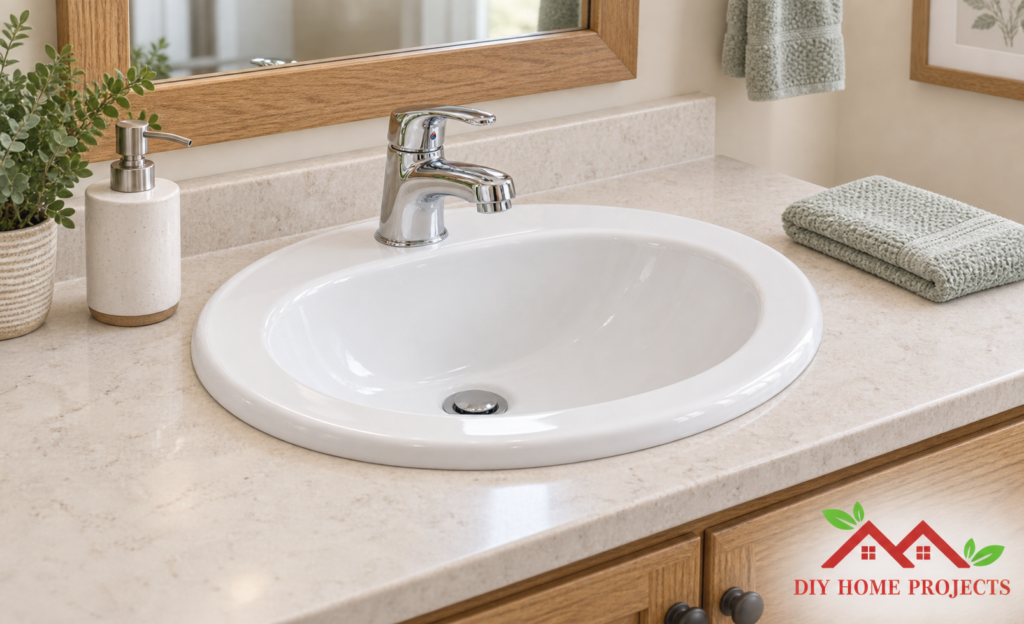
A drop-in sink sits inside a countertop opening, with its rim resting on top. It can be convenient when replacing an existing basin while keeping the counter.
The replacement must match the opening and mounting requirements. Its raised rim also creates an edge that needs regular cleaning.
Undermount Sink
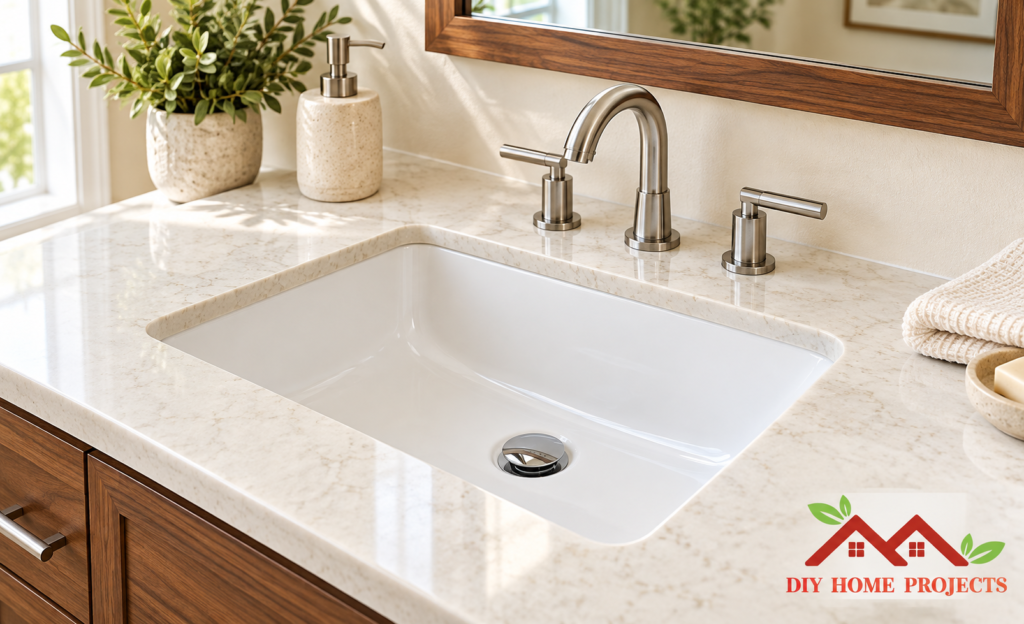
An undermount basin attaches beneath the countertop. This makes it easier to wipe water from the counter into the bowl.
It requires a suitable countertop, correctly finished cutout, and proper support. Check the joint beneath the counter during cleaning.
Vessel Sink
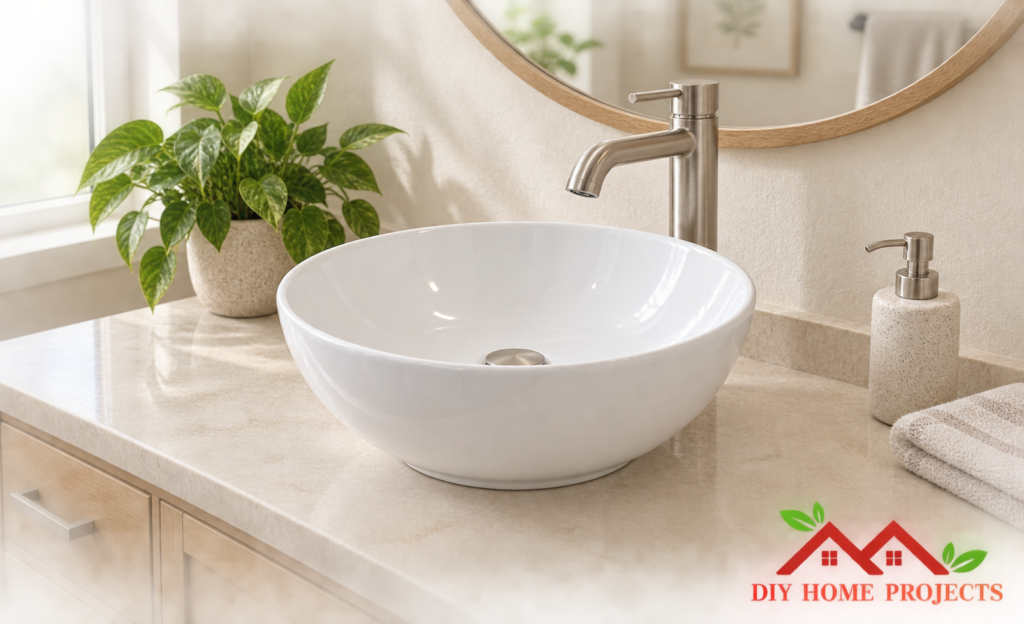
A vessel bowl sits partly or entirely above the counter. It works well when you want the basin to be a visible design feature.
Check the final rim height, faucet clearance, and space around the bowl. A dramatic shape is less appealing if you cannot comfortably wash your hands or clean behind it.
Wall-Mounted or Pedestal Sink
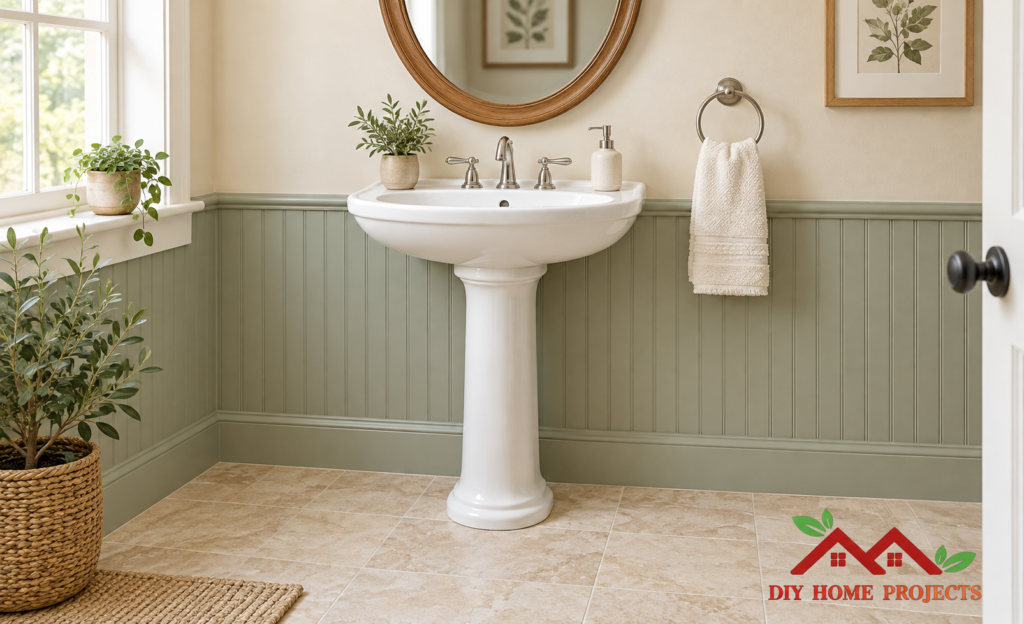
A wall-mounted basin leaves the floor beneath it open. A pedestal design places a column beneath the bowl and can conceal some plumbing.
Both can suit bathrooms where enclosed storage is less important. Wall-mounted models need appropriate structural support.
For a busy bathroom, compare these styles against a vanity basin that provides drawers or cupboards. Kohler’s bathroom sink guide outlines the main installation options.
Bathroom Sink Materials: Benefits and Care
Ceramic and Vitreous China
Glazed ceramic and vitreous china are practical options for everyday use. Their smooth surfaces are generally easy to clean, and they suit many decorating styles.
They can still chip or crack if struck by a heavy object. Avoid dropping glass bottles or tools into the bowl.
Solid Surface
Solid-surface basins offer a consistent appearance and are sometimes integrated with the countertop.
Some products can be professionally refinished to address minor damage. Repair methods and cleaning restrictions vary, so follow the specific manufacturer’s instructions.
Natural Stone
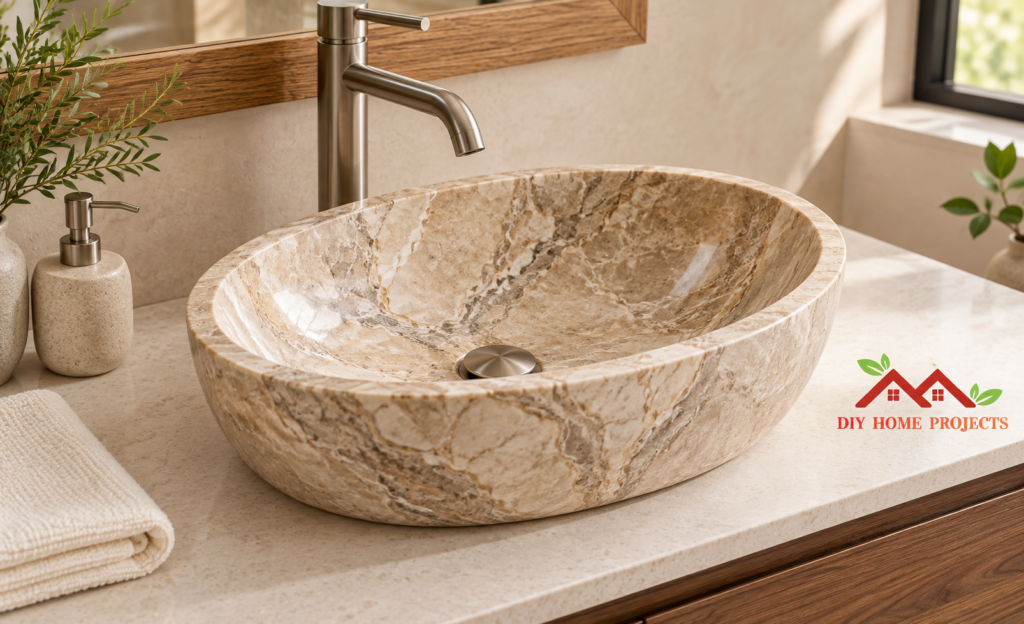
A stone basin offers individual patterns and texture, but maintenance depends on the stone and finish.
Some require sealing. Acid-sensitive materials such as marble can be damaged by vinegar and acidic cleaners. Choose stone only if its care requirements fit your routine.
Glass and Metal
Glass makes the basin a decorative feature, although water spots and soap residue may show clearly.
Metal options range from stainless steel to copper. Some finishes change naturally over time, so check whether the product is designed to develop a patina before buying.
Match Your Faucet and Drain
Select the bathroom sink and faucet together. Confirm whether the faucet mounts on the basin, countertop, or wall.
For predrilled basins, the faucet must match the hole arrangement and spacing. A compatible deck plate may cover unused holes, but check its dimensions.
Spout reach also matters. The water stream should land comfortably inside the bowl, with enough space beneath the outlet for washing. Excessive height or poor positioning can contribute to splashing.
The drain assembly must match the basin’s outlet and overflow design. Check whether it is included in the price. Victorian Plumbing’s basin guide explains tap and waste compatibility.
Check the Full Cost and Everyday Practicality
Budget for the complete installation, including the faucet, drain, supports, countertop work, and plumbing labor.
Before committing:
- Open nearby doors and drawers to check clearance.
- Leave usable space for soap and daily essentials.
- Confirm access to the trap and plumbing connections.
- Read the cleaning instructions.
- Check which fittings are supplied.
A cardboard outline of the proposed basin can help you judge how much room it will occupy.
FAQ’s
Q1. What is a typical bathroom sink size?
Many single basins measure approximately 19–24 inches wide and 15–22 inches front to back. Exact dimensions vary by model.
Q. Which sink is suitable for a small bathroom?
A compact wall-mounted, corner, or shallow-projection basin can save space. Choose a small vanity basin if you also need storage.
Q3. Is a deeper sink better?
A deeper bowl offers washing room, but splash control also depends on bowl shape, faucet position, and water flow. Check underneath for drawer clearance.
Q4. Can I replace a sink without changing the countertop?
Often, yes, provided the new basin matches the existing opening, mounting arrangement, and plumbing space. Similar outside dimensions do not guarantee a fit.
Conclusion
Choose your bathroom sink by measuring first, then comparing styles and materials. Check the usable bowl space, faucet compatibility, and cleaning requirements. Include installation costs before deciding. A basin that fits your daily routine will remain useful long after the bathroom makeover is finished.
