

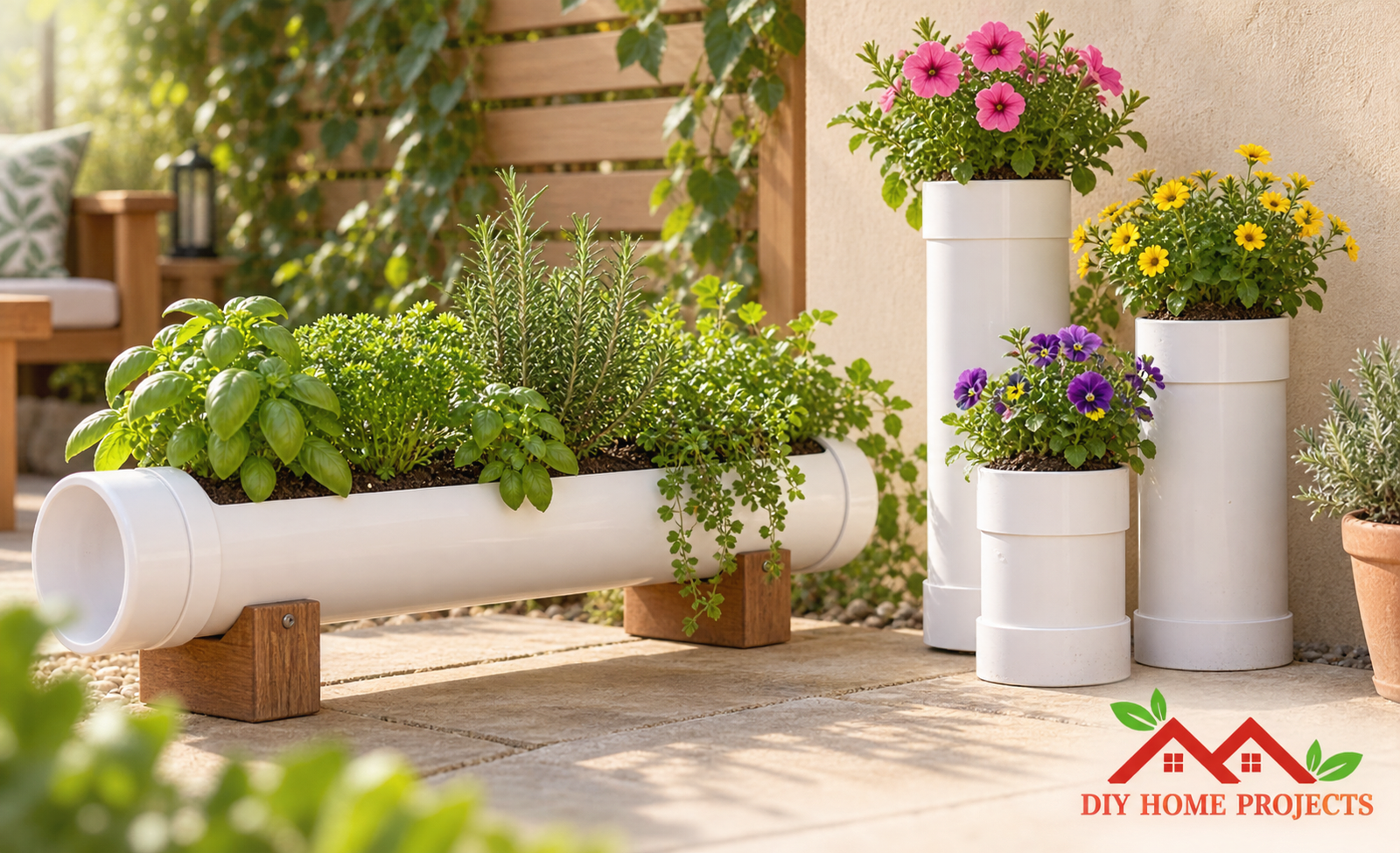
Pipe pots are planting containers made from sections of pipe, designed in a tubular shape, or built to attach around a drainpipe. In gardening, the term covers several different products and DIY designs, so checking how a planter works is just as important as checking how it looks.
For anyone working with a small balcony, narrow patio or empty garden wall, these containers offer an adaptable way to add greenery. A simple upright pipe can hold an individual plant, while a horizontal planter can create a row of flowers or compact herbs.
Successful planting depends on a few essentials: enough room for roots, reliable drainage, suitable materials and the right location. This guide explains how to choose, arrange and care for pipe pots without making the project unnecessarily complicated.
What Are Pipe Pots?
Unlike traditional flowerpots, which usually have a broad opening and a tapered base, pipe pots often have a straight, cylindrical body. Some are actual pipe sections converted into containers. Others are commercially manufactured planters that simply use a similar shape.
You may also see the name used for small pots with brackets that fit around an existing downpipe. These hold plants in separate containers; the building’s drainage pipe remains in place and continues carrying rainwater.
Understanding these differences helps you avoid buying the wrong product. A decorative tube-shaped container may need an inner nursery pot, while a purpose-built planter may already include drainage holes and mounting hardware.
Before buying, look for photographs of the underside, measurements of the planting space and clear installation instructions.
Main Types of Pipe Pots
Upright Pipe Planters
Upright designs use a vertical section of pipe with a supported base. They can work as individual planters or as a group arranged at different heights.
Their narrow shape suits corners and small display areas, but a tall container needs a stable base. Height alone does not guarantee useful growing space: the internal width must also accommodate the plant’s roots.
Horizontal Pipe Planters
Horizontal designs usually have planting openings cut along the upper surface. They can sit on a frame or attach to suitable supports.
These planters create a neat row of greenery, making them useful for compact plants. However, shallow designs hold limited growing medium, which makes careful watering and plant selection especially important.
Vertical Planting Towers
A planting tower contains several openings arranged along an upright pipe. The layout allows plants to grow at different heights within a small footprint.
The main challenge is consistency. Upper and lower planting pockets may receive different amounts of light and moisture, so every opening needs attention when checking growing conditions.
Drainpipe-Mounted Pots
These are separate planters designed to attach around a downpipe with compatible brackets or clips.
Check the stated pipe diameter and load limit before installation. Wet growing medium adds weight, and an existing downpipe should never be assumed capable of supporting a heavy planter arrangement.
Why Use Pipe Pots?
The main attraction is flexibility. You can use a narrow container where a broad planter would block a walkway, or arrange small pots vertically where floor space is limited.
They also give you several design options:
- Place matching upright planters beside an entrance.
- Add a short row of herbs near an outdoor seating area.
- Use trailing plants to soften a plain wall.
- Group tubular pots at different heights for a layered display.
- Create a removable seasonal flower arrangement.
For DIY projects, suitable leftover materials may reduce the amount you need to buy. However, compare the complete cost before starting. End caps, brackets, tools, growing medium and finishes can make a homemade design more expensive than expected.
Pipe pots are most useful when their shape solves a real space or display problem.
How to Choose the Right Pipe Pots
Match the Container to the Mature Plant
A small seedling can fit into almost any opening. The better question is whether that space will still be suitable several months later.
Check the plant’s expected mature size and container requirements. Allow room for roots to develop and enough access to remove the plant when repotting becomes necessary.
A narrow opening above a wider root area can make removal difficult, particularly in permanent DIY installations.
Check Drainage Before Appearance
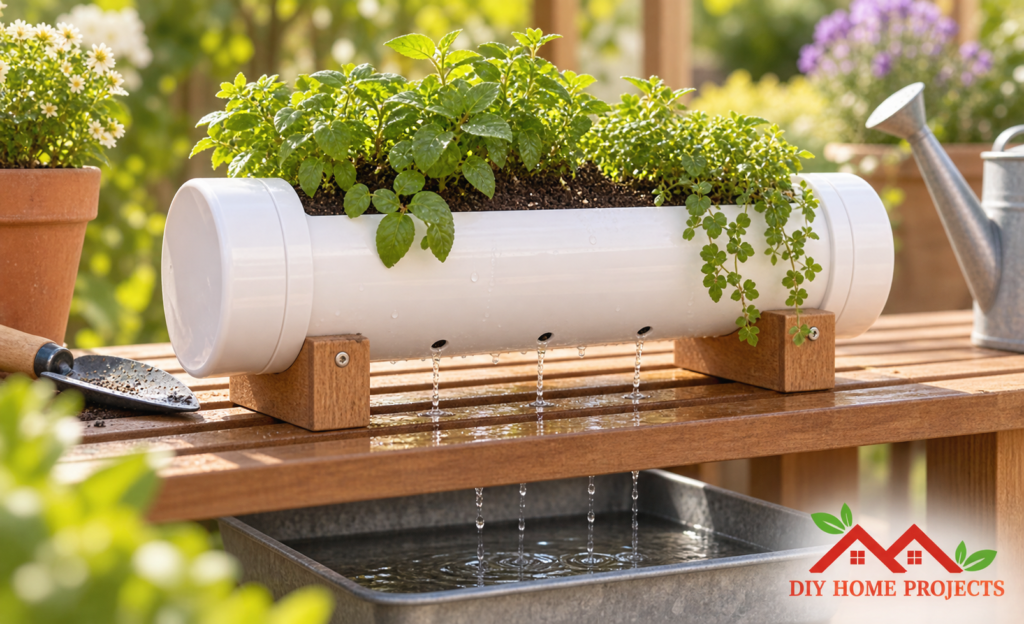
Water needs a clear route out of the planting area. A sealed pipe section may look like a finished planter, but without drainage it can collect water around the roots.
If a decorative container has no drainage holes, use it as an outer holder for a removable nursery pot. Water the inner pot separately, allow it to drain and empty any collected water before replacing it.
Consider Materials and Previous Use
For repurposed pipes, establish what the material is and how it was previously used. Avoid pieces with unknown chemical residues, severe deterioration or sharp damaged edges.
For edible planting, choose containers or materials with manufacturer guidance supporting the intended use. A pipe’s appearance alone cannot establish its suitability for growing food.
Outdoor planters also need to tolerate local weather. Check product information for sunlight exposure, temperature limits and installation requirements.
What Can You Grow in Pipe Pots?
Plant choice should follow container size, available sunlight and watering access.
| Plant group | Possible choices | Main consideration |
|---|---|---|
| Compact herbs | Chives, thyme, compact basil varieties | Match root space and light to the individual herb |
| Leafy crops | Leaf lettuce and baby salad greens | Provide adequate growing medium and consistent moisture |
| Small flowers | Violas and compact seasonal bedding plants | Check mature spread and seasonal conditions |
| Trailing plants | Trailing ornamentals suited to the location | Leave space for growth below the pot |
| Succulents | Small varieties suited to the climate | Provide excellent drainage and appropriate light |
Strawberries are another possibility in sufficiently roomy designs, but planting pockets must provide useful root space and access for watering.
Large tomatoes, vigorous climbers and substantial shrubs generally need much more growing volume and support than narrow pipe planters provide. Choose a larger conventional container when it better suits the plant.
Avoid grouping plants solely because they look attractive together. A moisture-loving plant and a drought-tolerant succulent are difficult to manage in the same shared root space.
How to Make a Simple Pipe Pot
An individual upright planter is a manageable starting project.
Gather a suitable pipe section, a compatible base, appropriate cutting and drilling tools, sandpaper, potting mix and a plant that fits the finished container.
- Plan the dimensions. Choose the diameter and height around the plant’s growing needs.
- Cut and smooth the pipe. Follow tool instructions, wear suitable protection and remove sharp edges.
- Fit a secure base. Use components intended to work together and follow any adhesive instructions.
- Provide drainage outlets. Position them at the lowest part of the planting chamber.
- Test with water. Confirm that excess water escapes and the container stays stable.
- Add growing medium and plant. Leave a small watering space below the rim.
- Check the final position. Make sure runoff will not damage surfaces or create a slippery walkway.
Avoid improvising a tall wall-mounted installation as your first project. A small freestanding container makes it easier to learn how the design handles water and weight.
Choosing Growing Medium and Caring for Plants
Use a growing mix intended for containers and suited to the plants you choose. Ordinary garden soil can become too dense in a confined pot. University of Maryland Extension explains that a suitable container medium supports roots while providing air, water and nutrients; lightweight commercial mixes can help achieve that balance. University of Maryland Extension
Check moisture regularly instead of following a fixed watering calendar. Container size, plant growth, wind and temperature all affect how quickly the mix dries.
For a planting tower, check several pockets rather than judging the whole structure by the top opening. Water slowly and confirm that moisture reaches the areas where roots are growing.
Feed according to the plant’s needs and the fertilizer label. Some fresh potting mixes already contain fertilizer, so check the packaging before adding more.
Remove dead foliage, inspect drainage outlets and look for loose brackets or cracks during routine care.
Common Mistakes to Avoid
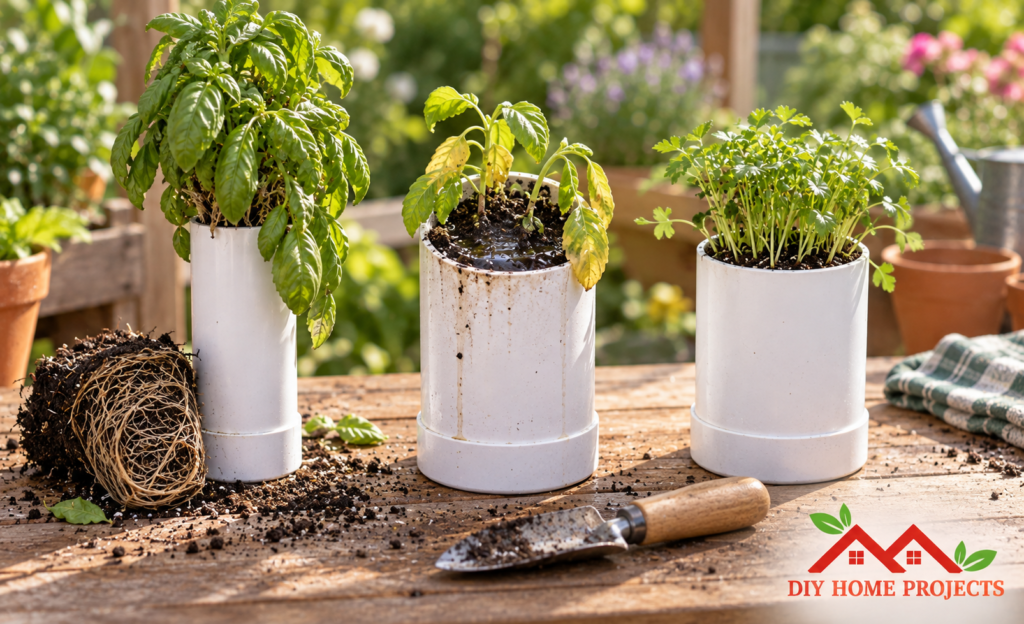
The most common problems come from treating a pipe planter as a decoration first and a growing container second.
Avoid these mistakes:
- Choosing a pipe too narrow for the mature plant.
- Filling a sealed container without providing drainage.
- Overcrowding planting openings.
- Mounting pots without accounting for their watered weight.
- Positioning plants where they cannot receive suitable light.
- Letting runoff repeatedly soak walls or indoor furniture.
- Assuming every plant in a vertical arrangement needs identical care.
Starting with one or two containers gives you time to see what works in your space before building a larger display.
FAQ’s
Q1. Can pipe pots be used indoors?
Yes, with suitable light and drainage to protect indoor surfaces.
Q2. Can you grow vegetables in pipe pots?
Yes, compact crops like lettuce can grow in suitably sized pipe pots.
Q3. Do pipe pots need drainage holes?
Yes, when planting directly inside them, excess water must escape.
Q4. Are DIY pipe pots cheaper?
They can be, especially if you already have suitable materials and tools.
Q5. How often should you water pipe pots?
Check the soil regularly and water according to the plant’s needs.
Conclusion
Pipe pots offer a practical way to add greenery to small spaces. Choose suitable materials and enough room for your plants to grow. Good drainage, proper light and careful watering help plants thrive. Start with a simple design that fits your home, balcony or garden.
